

What Documents Do You Need to Register an Address in Japan? The 14-Day Procedure
September 11, 2026
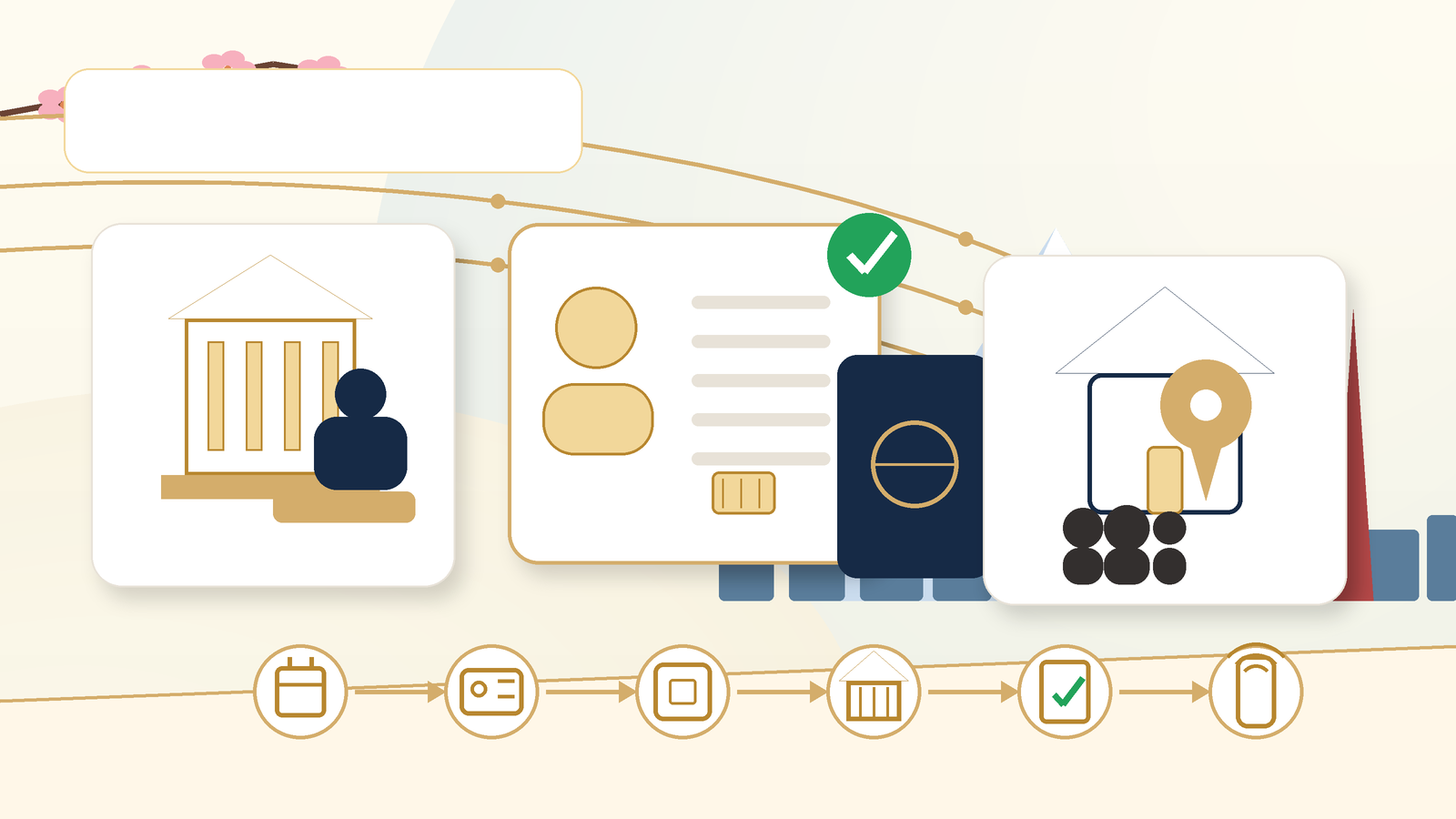
Quick Answer
When registering your address in Japan (住民登録 / jūmin tōroku), you must bring the Residence Cards (在留カード) of all household members, passports, and your My Number Card or My Number Notification Slip. If you are moving from another city or ward, you must also provide a Moving-Out Certificate (転出証明書 – tenshutsu shōmeisho) issued by your previous municipality.
This procedure is handled at the resident affairs counter of the ward office or city hall of your new municipality, is free of charge, and must be completed within 14 days of moving into your new home. It is typically processed on the same day, and the staff will print your new address on the back of your Residence Card.
Who This Guide Is For
This guide is designed for foreign residents living in Japan, specifically:
- International students, technical interns, and workers arriving in Japan for the first time who received their Residence Card at the airport and have just moved into an apartment or dormitory.
- Individuals moving within the same ward or city (for example, moving from one apartment to another within Shinjuku-ku) — filing a Notice of Change of Address (転居届 / tenkyo todoke).
- Individuals moving to a different ward or city (for example, moving from Saitama to Tokyo) — filing a Moving-Out Notice (転出届) at the old municipality and a Moving-In Notice (転入届) at the new one.
- Individuals sponsoring a spouse or child to Japan and registering the entire family under one household (世帯).
- Individuals who need a copy of their Certificate of Residence (住民票 / jūminhyō) to open a bank account, sign up for a voice SIM, take a driver's license exam, or apply for subsidies.
Who This Does NOT Apply To
Not everyone residing in Japan is eligible (or required) to register an address. This article does not apply to:
- Short-term stay visa holders (短期滞在 – Temporary Visitor), such as tourists or business visitors staying for 15, 30, or 90 days. This group cannot be registered in the Basic Resident Register.
- Individuals granted a period of stay of 3 months or less. Under the Basic Resident Registration Act, only foreign nationals staying for more than 3 months are entered into the Basic Resident Register (住民基本台帳).
- Individuals holding diplomatic (外交) or official (公用) status.
- Individuals who do not yet have a fixed address — for instance, those staying temporarily in a hotel or at a friend's place for a few weeks while apartment hunting. You can only file once you have established a genuine residence.
- Individuals leaving Japan permanently: in this situation, you file a Moving-Out Notice (転出届) and surrender your Residence Card at the airport rather than registering a new address.
Furthermore, the steps described here are administrative procedures with your local ward office / city hall. They are distinct from reporting changes of employment, changing your status of residence, or extending a visa — all of which fall under the jurisdiction of the Immigration Services Agency of Japan (出入国在留管理庁).
Step-by-Step Instructions
Scenario 1: First-Time Arrival in Japan
- Move into your new residence and record the exact address in Japanese (including building name and room number). Ask your landlord, employer, or school if you cannot read it.
- Track your deadline: you have 14 days from the date you move in to complete the notification.
- Bring your Residence Card + passport to the ward office or city hall of the municipality where you reside.
- At the reception desk, say "住居地の届出をしたいです" (I would like to report my place of residence) or present your Residence Card — staff will immediately understand and provide the Moving-In Notification form (転入届).
- Complete the form: enter your full name (as written on your Residence Card), date of birth, nationality, new address, move-in date, previous address (write your overseas address if newly arrived), head of household (世帯主 / setainushi), and your relationship to the head of household.
- Submit the documents and wait for your number/name to be called. The staff will print your new address onto the back of your Residence Card.
- Complete accompanying procedures on the same day (highly recommended): enroll in the National Health Insurance system (国民健康保険), enroll in the National Pension system (国民年金) if not covered by company social insurance, and apply for your My Number Card.
- Request 1–2 copies of your Certificate of Residence (住民票 / jūminhyō) for opening a bank account, signing up for a phone contract, or setting up utilities.
Scenario 2: Moving Within the Same Ward/City (転居届)
- Move into your new home.
- Within 14 days, visit your existing ward office / city hall and submit a Change of Address Notice (転居届).
- Bring the Residence Cards of all moving household members + your My Number Cards.
- Staff will update the address on the back of your Residence Cards and on the chip/surface of your My Number Cards.
- No Moving-Out Certificate (転出証明書) is required because you are not leaving the municipality.
Scenario 3: Moving to a Different Ward/City (Moving Out → Moving In)
- At your old municipality: submit a Moving-Out Notice (転出届). This can be filed up to roughly 14 days before your move, or within 14 days after moving.
- Receive your Moving-Out Certificate (転出証明書). Keep this document safe — if you lose it, you will have to return to your previous ward office to obtain a replacement.
- Surrender your National Health Insurance card issued by the old municipality (if applicable).
- At your new municipality: within 14 days of moving in, submit a Moving-In Notice (転入届) accompanied by your Moving-Out Certificate, Residence Card, passport, and My Number Card.
- Re-enroll in National Health Insurance at your new municipality and update the address on your My Number Card.
Tip: If you hold a valid My Number Card, you can submit your Moving-Out Notice (転出届) online via Mynaportal (using the Moving One-Stop Service / 引越しワンストップサービス) without having to visit your former ward office in person. However, the Moving-In procedure (転入) at the new office must still be completed at the counter in person.
Required Documents
Here is the standard checklist — bring everything to avoid unnecessary return trips:
- Residence Card (在留カード) — mandatory. Required for all household members moving together. If your card has not yet been issued (e.g., your passport is stamped "在留カード後日交付" [Residence Card to be issued later]), bring the passport bearing that stamp.
- Passport — mandatory for newly arrived foreign nationals; recommended for all others for identity verification.
- My Number Card (マイナンバーカード) or Notification Slip/Notice (通知カード / 個人番号通知書) — if already issued.
- Moving-Out Certificate (転出証明書) — required only when moving from another municipality and not using the online service.
- National Health Insurance Card (国民健康保険証) if currently enrolled — for cancellation or transfer.
- Pension handbook / Basic Pension Number Notice (年金手帳 / 基礎年金番号通知書) if enrolled in the National Pension (国民年金).
- Personal seal (印鑑 / inkan) — many municipalities have abolished this requirement, but bringing one along can prevent delays.
- Power of attorney (委任状) + official ID of your proxy — if someone outside your immediate household is filing on your behalf.
Additional Documents When Registering a Family in One Household
- Marriage certificate (or child's birth certificate) issued by your home country, along with a Japanese translation that clearly notes the translator's full name. The ward office requires this to verify marital or parental relationships before entering them accurately on the 住民票.
- Residence Cards of your spouse and children.
Document Checklist by Scenario
| Scenario | Form | Key Documents |
|---|---|---|
| First-time arrival in Japan | 転入届 / 住居地届出 | Residence Card, passport |
| Moving within same ward/city | 転居届 | Residence Card, My Number Card |
| Moving to a different municipality | 転出届 + 転入届 | Residence Card, passport, 転出証明書, My Number Card |
| Adding spouse or child to household | 転入届 / 世帯変更届 | Marriage/birth certificate + Japanese translation |
| Filing through a proxy | Depends on scenario | 委任状 (Power of attorney) + proxy's photo ID |
Fees and Costs
The address registration procedure itself is completely free. You only pay fees when ordering official copies of certificates:
| Item | Typical Cost |
|---|---|
| Filing 転入届 / 転居届 / 転出届 | 0 yen |
| Updating address on Residence Card | 0 yen |
| Copy of Certificate of Residence (住民票 / jūminhyō) | Approx. 200–450 yen per copy (commonly 300 yen) |
| Moving-Out Certificate (転出証明書) | 0 yen |
| First-time My Number Card issuance | 0 yen |
| Printing 住民票 at a convenience store (using My Number Card) | Approx. 200–300 yen per copy |
Certificate fees vary by municipality, so verify on your local ward office's website. It is best to obtain two copies of your 住民票 during your initial visit: one for opening a bank account and one for mobile contracts or your employer/school.
Deadlines and Processing Times
- Filing deadline: 14 days from the date you establish residence at the new address. This is a legal requirement under the Basic Resident Registration Act (住民基本台帳法).
- Moving-Out Notices (転出届) can be filed in advance (usually up to 14 days before your move), which is convenient if you know your moving schedule ahead of time.
- Counter wait times: approximately 30 minutes to 1 hour on regular days. During late March through early April (peak moving season) or on Monday mornings, wait times can extend to 1–3 hours.
- Turnaround: completed on the same day. Your new address will be printed on the back of your Residence Card before you leave.
- My Number Card (if applying for a new one) takes roughly 3–4 weeks to issue, which you collect at the office or follow mailed notification instructions.
For foreign nationals, there is another critical rule: under the Immigration Control Act, failing to report an address within 90 days of entry into Japan (or reporting a false address) can lead to the revocation of your status of residence. Make sure not to overlook this obligation.
Where to Submit / Locations
- Tokyo's 23 Special Wards: The 区役所 (ward office) of your ward — for example, Shinjuku Ward Office, Toshima Ward Office. The service counter is typically named 戸籍住民課 (Family Registry & Resident Division) or 区民課 (Resident Division).
- Other cities: 市役所 (City Hall), at the 市民課 / 住民課 (Citizen / Resident Affairs Division).
- Towns and villages: 町役場 (Town Office) / 村役場 (Village Office).
- Branch offices (出張所・支所): Many municipalities operate smaller local branch offices closer to residential districts that also accept 転入届 — an easier option if you live far from the central ward office.
- Online: Available only for Moving-Out Notices (転出届) via Mynaportal for individuals holding a valid My Number Card.
Operating hours are generally 8:30 AM to 5:15 PM, Monday through Friday, closed on Saturdays, Sundays, and national holidays. Some ward offices offer extended evening hours on designated weekdays or open on the first Sunday of the month — check your local municipality's official website in advance.
Language support: Many ward offices in areas with high foreign resident populations (Shinjuku, Toshima, Arakawa, Adachi, etc.) provide Vietnamese, English, and Chinese interpreters at set times or utilize electronic translation tablets. If your Japanese is limited, call ahead to verify interpreter schedules, or bring someone along who speaks Japanese.
Common Mistakes to Avoid
- Filing after the 14-day deadline. Your filing will still be accepted, but you may be asked to explain the delay, and under Japanese law, a court fine (過料) of up to 50,000 yen may technically apply. In practice, first-time delays usually result in a reminder, but you should not rely on luck.
- Failing to bring Residence Cards for the entire family. Bringing only your own card means only you will be registered, leaving your spouse or children pending and requiring another trip.
- Losing your Moving-Out Certificate (転出証明書). Without this certificate, your new ward office cannot process your registration (unless you used the online My Number procedure). Take a smartphone photo as a backup and store the physical document securely.
- Asking a friend to file for you without a power of attorney (委任状). Anyone who does not share your official household must present an authorized power of attorney.
- Entering an incorrect room number. A single-digit error can prevent vital correspondence (My Number Cards, tax notices, Immigration communications) from reaching you.
- Forgetting to enroll in or cancel National Health Insurance. Moving out without canceling leads to duplicate billing; moving in without enrolling leaves you liable for 100% of medical costs if you visit a clinic.
- Forgetting to update the address on your My Number Card. The My Number Card must also be updated with your new address; otherwise, it becomes invalid for use as an official identity document.
- Forgetting to update your address with other institutions afterward: banks, driver's license centers (at police stations), your employer/school, and your mobile carrier. For SIM cards registered under your name, discrepancies between your contract address and Residence Card address can lead to identity verification failures.
- Assuming address registration covers all Immigration reporting. While your address filing is automatically forwarded by the ward office to Immigration, other changes (change of employer, change of school, name changes, divorce, etc.) must still be reported directly and separately to the Immigration Services Agency.
Frequently Asked Questions
Is there a fee to register an address in Japan?
No. Submitting a 転入届, 転居届, or 転出届 and updating the address on your Residence Card are entirely free. Fees apply only when requesting official copies of your Certificate of Residence (住民票), typically around 300 yen per copy.
Do I have to register if I live in a company or school dormitory?
Yes. As long as you reside there for more than 3 months, registration is mandatory, even in dormitories or shared accommodations. Request your exact official address along with your assigned room number from your company or school.
What should I do if I cannot speak Japanese?
Ward offices in areas with many foreign residents often provide interpreters or translation devices. You can call ahead to ask about Vietnamese interpretation schedules, or ask a senpai or dorm manager to accompany you. Simply showing your Residence Card to the counter staff will indicate what procedure you need.
Can I register if I have not yet received my Residence Card?
Yes, provided your passport has been stamped "在留カード後日交付" (Residence Card to be issued at a later date). You can complete the notification using your stamped passport, and your Residence Card will be delivered to your registered address via registered mail.
What happens if I move without reporting my new address?
From an administrative standpoint, you may face a fine of up to 50,000 yen under the Basic Resident Registration Act. More critically, failing to report your address within 90 days can lead to the revocation of your status of residence under the Immigration Control Act. In addition, you will miss essential mail and may face complications during visa renewals.
How does a 住民票 differ from a Residence Card?
A Residence Card (在留カード) is an official identification document issued by the Immigration Services Agency that certifies your legal status of residence and period of stay. A Certificate of Residence (住民票 / jūminhyō) is a certified record issued by your local municipal office verifying your registered local address. Banks, mobile operators, and employers frequently request both.
Do I need a 住民票 to sign up for a voice SIM card?
In most instances, a Residence Card with your updated address printed on the back is sufficient. A 住民票 is only required if the address on your card is outdated or if the carrier requests supplementary documentation. What matters most is that the address provided in your application matches your official documentation exactly.
Do I need to do anything at the ward office when leaving Japan permanently?
Yes. You must file a Moving-Out Notice (転出届) at your ward office before departure (specifying your departure date), cancel your National Health Insurance, settle any outstanding tax or insurance balances, and surrender your Residence Card to immigration officers at the airport upon departure.
References
- Ministry of Internal Affairs and Communications (総務省) — Basic Resident Registration System for Foreign Residents (外国人住民に係る住民基本台帳制度).
- Immigration Services Agency of Japan (出入国在留管理庁) — Guidelines for Notification of Place of Residence (住居地の届出) and Residence Card procedures.
- Digital Agency & Mynaportal (デジタル庁・マイナポータル) — Moving One-Stop Service (引越しワンストップサービス) utilizing the My Number Card.
- Municipal procedural guidelines from Tokyo ward offices (e.g., Shinjuku-ku, Toshima-ku) regarding 転入届, 転居届, 転出届, and 住民票 issuance fees.
Note: Specific regulations, form templates, certificate fees, and office hours vary by municipality and are subject to change. Before visiting, verify details on the official website of your local ward or city office or call them directly. This guide is provided for informational purposes only and does not constitute formal legal or administrative advice.
Source Verification Date
The information in this guide was last verified in June 2025. If you are reading this long after that date, please cross-reference with the official websites of your local ward office and the Immigration Services Agency.
Need Mobile Service Right After Registering Your Address?
Once you have secured your address and updated your Residence Card, the next priority for most newcomers is setting up a phone number and internet connection — both of which are required by banks, workplaces, and educational institutions.
HD TELECOM, located in Shin-Okubo, Tokyo, provides dedicated support in Vietnamese with flexible options tailored for newcomers settling in Japan:
- Monthly Data SIM — instant high-speed internet with no long-term contracts.
- Monthly eSIM — rapid digital activation without waiting for physical SIM delivery.
- Monthly Pocket WiFi — optimal for dormitory residents or those awaiting home broadband installation.
- 12-Month Prepaid SIM — a one-time payment for year-round connectivity and peace of mind.
If you are unsure which plan matches your needs, explore our product lineup or reach out to our support team for assistance in Vietnamese. You can also find additional practical guides on living in Japan on our blog.
Related products
Find your plan with HD TELECOM
SIM, eSIM and Pocket WiFi — genuine quality, clear pricing, 24/7 support.

How Much Are the Initial Costs to Rent an Apartment in Japan? Detailed Cost Breakdown

What is the My Number Card? Do foreigners in Japan need one?

How to Set Up Wi-Fi in Japan If Your Apartment Already Has an Internet Outlet: A-to-Z Guide

When Does HD Telecom Ship Physical SIMs or Pocket WiFi? Delivery Times