
Registering a SIM in Japan Without a Credit Card: 4 Payment Methods for Newcomers
August 9, 2026
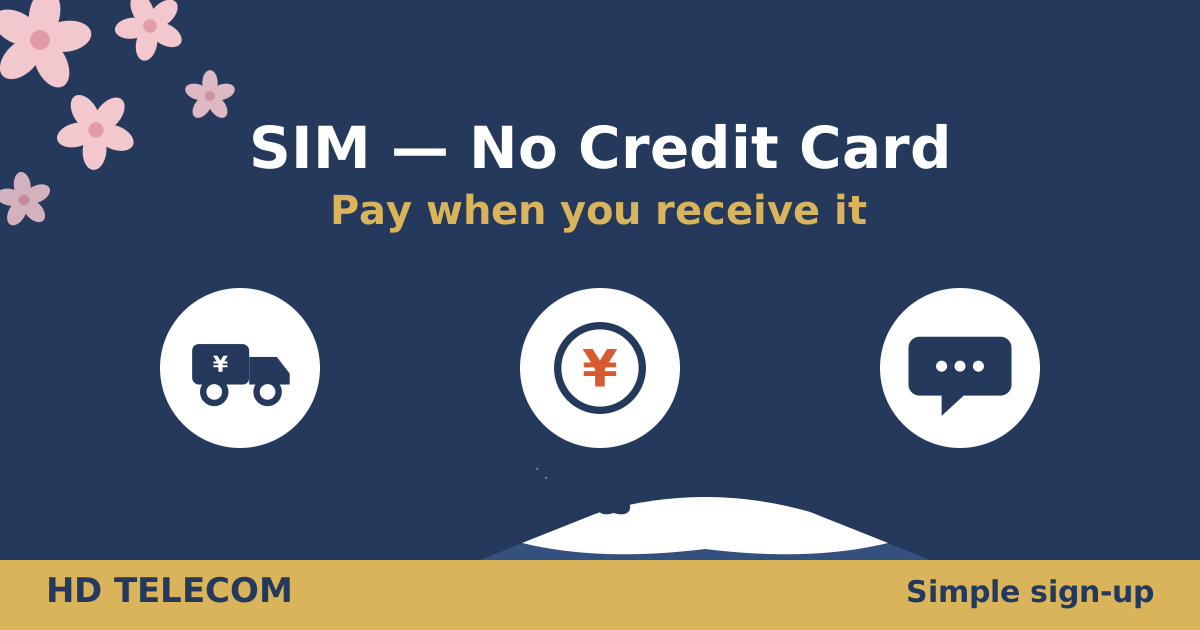
The biggest obstacle for Vietnamese newcomers wanting a SIM card in Japan isn't the language barrier, but the fine print on the application form: "Only credit cards issued in Japan are accepted." Meanwhile, applying for a Japanese credit card requires... a Japanese phone number—a classic catch-22. This article shows you 4 ways out of that loop, ranked by ease for someone who just arrived.
1. Why are Japanese carriers so obsessed with credit cards?
Phone service in Japan is postpaid: you use it this month and get charged next month. Carriers want to ensure they get paid, and credit cards serve as an off-the-shelf credit screening tool. Foreigners who just arrived have no credit history, so they get disqualified right at the start—not due to discrimination, but because the scoring system has no data on you. Understanding this helps you realize: the solution is to find providers who handle risk differently, such as collecting payment upfront or upon delivery.
2. Method 1: Cash on Delivery (COD / 代金引換)—Easiest for Newcomers
You order the SIM online, the courier delivers it to your doorstep, you check the package, and pay cash to the delivery person. Done—no card, no bank account, no app required.
- Pros: Requires no Japanese financial tools whatsoever; you pay only when you see the package, giving complete peace of mind for cautious people.
- Cons: You must be present at delivery (choose a time slot when ordering); some providers charge a small COD fee.
- Best for: Your first week in Japan, when you haven't opened anything besides your suitcases. This is precisely why HD TELECOM makes "Cash on Delivery" the top choice on our payment page.
3. Method 2: Convenience Store Payment (Combini Payment)
After placing your order, you receive a code via email. Take that code to 7-Eleven, FamilyMart, Lawson, etc., enter it into a machine or show it at the register, pay cash, and get a receipt. Once the provider receives the payment, they send out your SIM.
- Pros: Convenience stores are open 24/7 and everywhere; pay whenever it's convenient for you.
- Cons: Requires an extra trip outside; payment codes have an expiration date (usually 3–7 days), and your order is canceled automatically if you forget.
- Tip: Screenshot the code and deadline as soon as you get the email, and set an alarm if you plan to pay the next day.
4. Method 3: Bank Transfer (振込 - Furikomi)
Ideal once you have opened a Yucho (Japan Post Bank) account—the easiest bank for foreigners to open, with many branches providing Vietnamese application forms. You transfer money to the provider's account, specifying the exact transfer note as instructed (usually order code + name).
- Pros: Familiar to Vietnamese people; can be done at ATMs too.
- Cons: Transfer fee of a few hundred yen; transfers made after hours may not go through until the next day; wrong transfer notes require time-consuming manual reconciliation.
- Note: Always screenshot or keep the transfer receipt for verification if needed.
5. Method 4: Debit Cards and E-Wallets—A Gray Area to Read Carefully
- Japanese Debit Cards (Yucho Debit, Sony Bank Wallet, etc.): Functions like a Visa/Mastercard but deducts directly from your bank account. Many MVNOs accept them, while some reject them—you must test or ask beforehand.
- International Credit Cards from Vietnam: Some sites accept Visa/Mastercard issued outside Japan, but it's not uncommon to get declined when the system verifies the address. Worth trying if you already have one, but don't rely on it as your primary option.
- PayPay and Japanese E-Wallets: Increasingly accepted; you can cash-charge PayPay at combinis—making it a very handy "credit card for those without a credit card," but you need a Japanese phone number to register, so this is only viable for your second SIM onwards.
6. First 6 Months Financial Roadmap—So You Won't Get Stuck Next Time
- Week 1: Register your address at the city hall → Get a SIM via COD or combini (Methods 1–2).
- Weeks 2–4: Open a Yucho bank account with your Residence Card + newly acquired SIM → From now on, you can make bank transfers and receive salary payments.
- Months 2–3: Register for PayPay, get a debit card—enjoy easy online shopping.
- Month 6+: Once you have a steady salary, try applying for foreigner-friendly credit cards (supermarket cards, student cards, etc.). Once you have a credit card, every plan option and installment purchase opens up.
7. Beware: "Registration Assistance Services" to Avoid
- Using someone else's name to register a SIM: Violates anti-crime regulations; the SIM can be blocked at any time and the named person faces legal liability. No matter how great a friendship is, don't ask or agree to register for someone else.
- Intermediaries charging unusually high "application fees": SIM registration is normally free or incurs a very small fee; anyone demanding tens of thousands of yen in service fees is a red flag.
- SIMs sold illicitly on social media: No contract, no support, and they might vanish along with your money after a month.
8. Frequently Asked Questions
Is COD more expensive than paying by card?
The plan price is the same; any difference is just a small COD fee depending on the provider. At HD TELECOM, we encourage new customers to use COD for mutual safety.
I accidentally placed an order paying by card and got rejected. Is my order lost?
Usually, the order status changes to pending; simply contact customer support to change the payment method. Avoid placing multiple orders repeatedly, as the system might flag your account.
Should I prepay for a whole year to get a discount?
Only do so if the provider is clearly reputable and your staying plans are certain. Prioritize flexibility over saving a few percent—newcomers' circumstances change very fast.
Conclusion
Not having a credit card isn't the end of the road—you just need to choose the right door. The quickest option for newcomers: order online, pay upon SIM delivery. After that, just follow the 6-month roadmap in Section 6, and next year you'll be able to sign up for anything just like a local. If you need guidance in Vietnamese at any step, HD TELECOM is always here to help.
Related products
Find your plan with HD TELECOM
SIM, eSIM and Pocket WiFi — genuine quality, clear pricing, 24/7 support.